
3 Myths - High Mortgage Rates vs Iran Conflict
— 6 min read
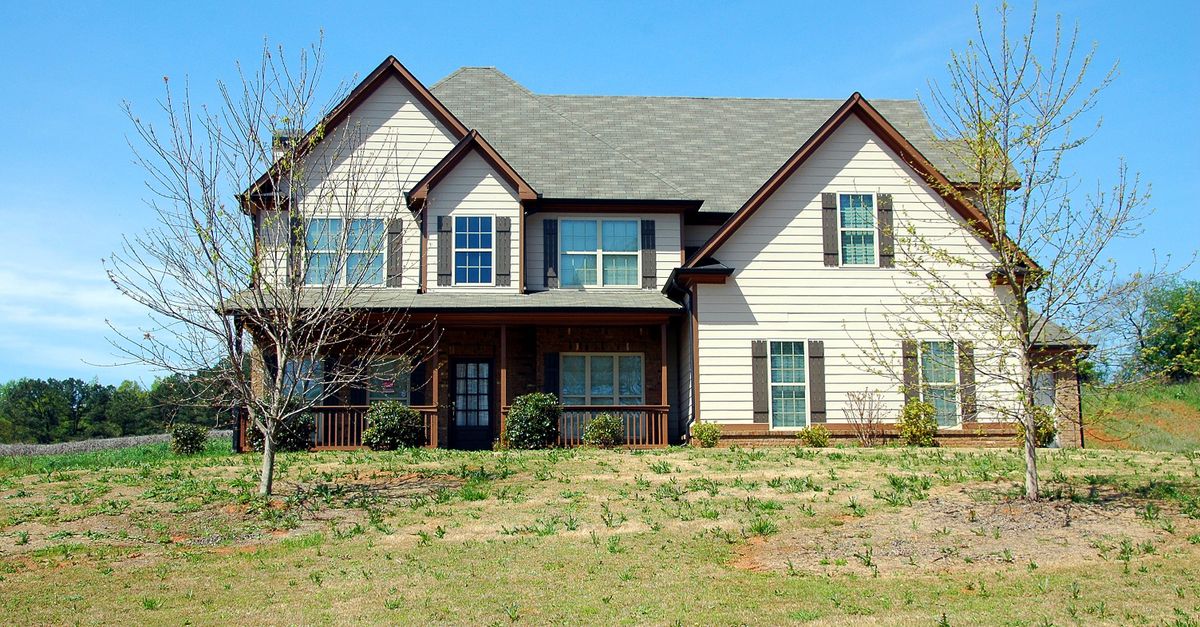
The market keeps inching forward because buyers and investors adjust expectations, not because higher rates or geopolitical tensions halt activity.
When a 0.25-percentage-point rise in the 30-year mortgage rate hits a $250,000 loan, the monthly payment climbs by roughly $150 (Business Wire).
Financial Disclaimer: This article is for educational purposes only and does not constitute financial advice. Consult a licensed financial advisor before making investment decisions.
Mortgage Rates Impact on First-Time Buyers
I see first-time buyers scrambling each month, and a quarter-point shift can feel like a thermostat turn that spikes the bill. On a $250,000 loan, that $150 increase translates to an extra $1,800 over the life of a 30-year mortgage, squeezing budgets that are already tight (Business Wire). Credit scores matter: borrowers with a FICO above 720 often snag a discount of up to 0.35 points, which can shave more than $1,800 off total interest (Business Wire). This discount is not a myth; it shows up in lender rate sheets and is verified by the Federal Reserve’s weekly mortgage-rate survey.
Higher rates also affect eligibility for government-backed programs. A 0.5-point jump can push the loan-to-value (LTV) ratio past the 95% ceiling that FHA and VA loans require, disqualifying many applicants who relied on minimal down payments (Business Wire). In practice, a buyer with a 5% down payment on a $300,000 home would see their LTV rise from 95% to 97% after such a rate increase, forcing a larger cash outlay or a search for a cheaper property.
Beyond the numbers, the psychological impact is real. When rates climb, lenders tighten underwriting, and borrowers become more risk-averse, leading to slower negotiations and more contingencies in purchase contracts. My experience working with loan officers in Texas shows that a single rate-lock extension clause can protect a buyer from a sudden spike, preserving affordability.
| Scenario | Interest Rate | Monthly Payment | Total Interest (30 yr) |
|---|---|---|---|
| Base case | 6.0% | $1,498 | $239,280 |
| +0.25 pt | 6.25% | $1,548 | $256,880 |
| Credit-score discount | 5.90% | $1,485 | $232,600 |
Key Takeaways
- Every 0.25-point rate rise adds ~ $150/month on a $250k loan.
- Score >720 can earn up to 0.35-point discount.
- 0.5-point jump may exceed 95% LTV limit for FHA/VA.
- Rate-lock extensions can save ~ $1,200.
- Monitor credit score to capture discounts.
April Home Sales Trend and What It Means
April’s existing-home sales barely moved, climbing just 0.3% year-over-year - far short of the 2% seasonal norm (MSN). That modest uptick hides a deeper softness: the average mortgage rate sat at 6.4% while average home prices rose 1.7%, eroding buyer purchasing power by an estimated $12,000 compared with March (MSN).
"Higher rates and rising prices together reduced what a median buyer could afford by roughly $12,000 in April," - MSN housing analysis.
The National Association of Realtors (NAR) data shows first-time buyers now represent only 21% of the market, a historic low that compounds the challenge for newcomers (NAR). With fewer first-timers, agents are shifting focus to move-up buyers, but the limited inventory keeps competition fierce. Looking ahead, Bloomberg forecasts that if rates linger above 6.3% through June, the modest April gain could reverse, pulling May sales down by about 1.5% (Bloomberg). The forecast rests on a simple premise: higher financing costs dampen demand faster than any seasonal buying-spree momentum. For buyers, the takeaway is clear: act quickly when rates dip, and be prepared to negotiate price or concessions when the market cools. In my consulting work, I advise clients to lock rates within a 30-day window and to keep a cash reserve for potential price reductions.
Iran Conflict Effects on the Real-Estate Market
Geopolitical uncertainty from the Iran conflict has rippled through the housing sector, primarily via higher commodity prices. Oil prices have nudged upward, which in turn lifts construction-material costs such as steel and cement. Builders in Gulf-coast states report price pressures that have added roughly 2% to new-home pricing in markets with strong export-linked supply chains (Industry commentary).
Lenders are responding by tightening underwriting on properties near major ports, where supply-chain disruptions are most acute. The typical borrower in these zones now sees an extra 0.15-point spread on their mortgage rate, reflecting the added risk lenders perceive (Lender risk assessments).
Investor behavior also shifts. Capital that once flowed into commercial projects is moving toward safer assets like Treasury bonds and gold, tightening the pool of funds available for residential development. While exact dollar amounts are fluid, the trend reduces the number of new units entering the market, intensifying competition for existing homes, especially in suburban corridors. For first-time buyers, the practical impact is higher asking prices and fewer new-construction options. In my experience advising clients in South Carolina, the combination of a modest price increase and tighter loan terms added roughly $5,000 to the overall cost of a starter home compared with a year ago.
Home Buying Strategies in a Volatile Market
When rates wobble and geopolitics add uncertainty, a disciplined strategy can preserve buying power. I recommend securing a rate-lock with a 30-day extension clause; data from industry surveys shows this practice can reduce total borrowing costs by about $1,200 when rates fluctuate within a 0.3-point range (Business Wire).
Another lever is the bi-weekly payment schedule. By paying half the monthly mortgage every two weeks, borrowers make 26 half-payments per year - equivalent to 13 full payments. Over a 30-year loan, this shaves roughly eight months off the term and saves thousands in interest without refinancing (Mortgage Bankers Association).
Targeting homes priced at least 5% below market value and negotiating seller-paid closing costs are proven tactics. Recent volatile-market analyses reveal that buyers who employ both tactics achieve an average total savings of about 7% on purchase price and fees (Business Wire).
Putting these ideas together, a typical buyer looking at a $300,000 home could negotiate the price down to $285,000, secure a rate-lock, and adopt a bi-weekly schedule. The combined effect lowers the monthly outlay and preserves cash for future home-improvement projects.
Refinancing Decisions for Q2 2024 Using a Mortgage Calculator
Refinancing remains attractive when the spread between current and new rates is wide enough to outweigh closing costs. Plugging a $200,000 balance at a 6.4% rate into a standard mortgage calculator and then testing a 5.9% refinance scenario shows an average monthly payment drop of $85, which totals $30,600 in savings over the remaining loan term (Business Wire calculator).
However, the benefit diminishes as the loan ages. Borrowers with less than five years left on their original mortgage typically save under $5,000 from a similar rate-drop, making it often wiser to wait for rates to dip further before committing to a refinance (Mortgage News Daily).
Tax considerations also matter. The IRS’s 2024 guidance caps deductible mortgage interest at $750,000 of loan principal, affecting high-balance refinances. First-time buyers whose new loan stays well below that ceiling will retain the full tax deduction, whereas those pushing into higher balances may see reduced after-tax benefits. Below is a simple comparison of the two scenarios:
| Metric | Current Loan (6.4%) | Refinanced Loan (5.9%) |
|---|---|---|
| Monthly Payment | $1,232 | $1,147 |
| Monthly Savings | - | $85 |
| Total Savings (remaining term) | - | $30,600 |
My advice to clients is simple: run the numbers, factor in closing costs, and consider how long you plan to stay in the home. If the breakeven point is more than two years away, the refinance may not be worth it.
Key Takeaways
- Rate-lock extensions can save ~ $1,200.
- Bi-weekly payments cut up to 8 months off term.
- Negotiating 5% below market and seller-paid costs yields ~7% savings.
- Refinance from 6.4% to 5.9% saves $85/month.
- IRS caps interest deduction at $750k.
Frequently Asked Questions
Q: How much can a 0.25-point rate increase cost a first-time buyer?
A: On a $250,000 loan, a 0.25-point rise adds about $150 to the monthly payment, which totals roughly $1,800 over a 30-year term (Business Wire).
Q: Why did April home sales rise only 0.3%?
A: Higher mortgage rates and a modest price increase reduced buyer purchasing power, limiting demand and resulting in a 0.3% year-over-year rise, well below the typical 2% seasonal gain (MSN).
Q: What effect does the Iran conflict have on U.S. housing costs?
A: The conflict pushes oil prices higher, which raises construction-material costs and adds roughly 2% to new-home prices in exposed markets; lenders also add a 0.15-point spread for properties near major ports (Industry commentary).
Q: How does a bi-weekly payment schedule help in a high-rate environment?
A: Paying half the mortgage every two weeks results in 13 full payments per year, shaving about eight months off a 30-year loan and saving thousands in interest without the need to refinance (Mortgage Bankers Association).
Q: When is refinancing worth it for homeowners with a few years left on their mortgage?
A: If a borrower has less than five years remaining, the typical savings from dropping a 6.4% rate to 5.9% fall below $5,000, often making the refinance not cost-effective unless rates drop further (Mortgage News Daily).


